
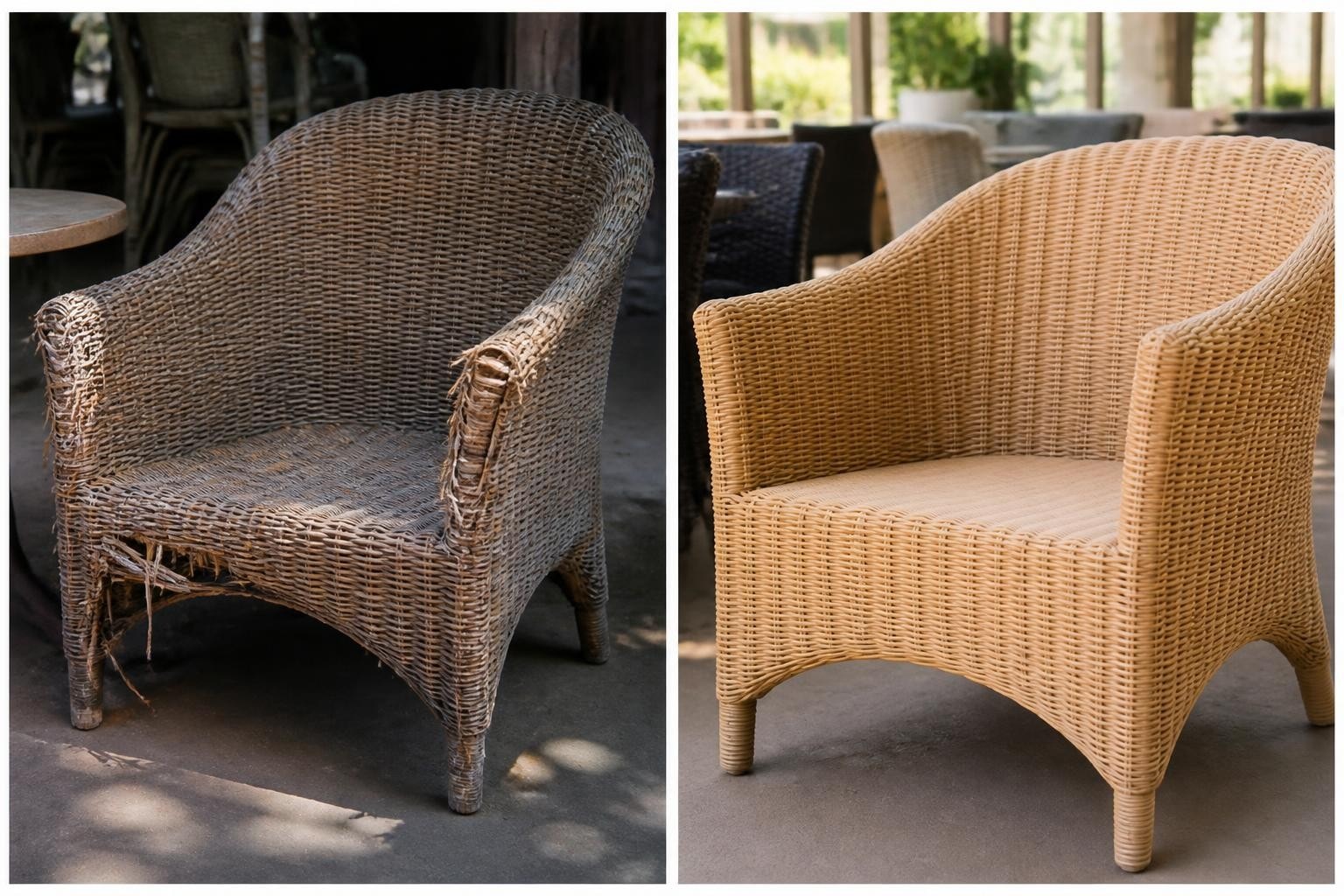
Outdoor furniture faces relentless exposure to sun, rain, humidity, and constant guest use in hospitality settings. Even the most durable synthetic rattan pieces eventually show signs of wear, from loose strands and broken weaves to faded finishes and structural weakness. For hotels, guesthouses, wine estates, and high-end residential properties across the Western Cape, understanding wicker patio furniture repair techniques becomes essential for maintaining the aesthetic appeal and functionality of outdoor spaces without the substantial cost of complete replacement.
Understanding Synthetic Rattan Damage Patterns
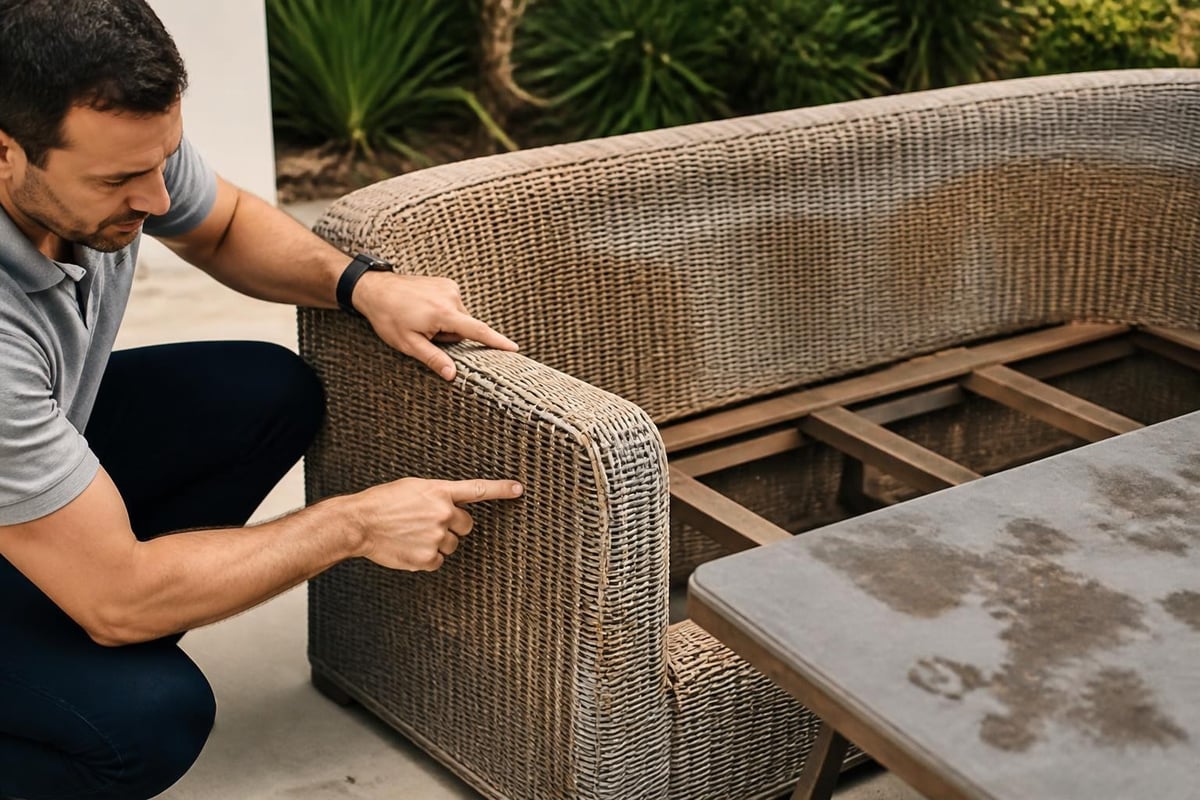
Professional restoration begins with accurate damage assessment. Synthetic rattan furniture typically exhibits specific wear patterns depending on its location and use intensity.
Common Deterioration Points
High-traffic hospitality environments reveal predictable stress zones:
- Armrests and seat edges where guests enter and exit furniture pieces
- Footrests on loungers experiencing continuous pressure and abrasion
- Dining chair backs where repeated contact causes weave loosening
- Table edge trim vulnerable to impacts and UV exposure
- Leg wrappings subjected to moisture pooling and ground contact
UV radiation remains the primary culprit for synthetic material degradation in the Western Cape climate. Extended sun exposure breaks down polymer chains, causing brittleness and color fading that compromises both appearance and structural integrity.
Material Composition Considerations
Not all synthetic rattan shares identical properties. Understanding the differences between materials helps determine appropriate repair approaches:
| Material Type | Durability Rating | UV Resistance | Repair Complexity |
|---|---|---|---|
| HDPE (High-Density Polyethylene) | Excellent | Superior | Moderate |
| PVC-Coated Polyester | Good | Moderate | Low |
| Resin-Impregnated Fiber | Very Good | Good | High |
| Standard Polypropylene | Fair | Limited | Low |
Premium hospitality furniture typically features HDPE synthetic rattan, valued for its weather resistance and longevity but requiring specialized skills for proper restoration.
Professional Assessment and Preparation
Successful wicker patio furniture repair demands systematic evaluation before beginning restoration work. Rushing into repairs without understanding the full scope often leads to incomplete results and recurring failures.
Structural Integrity Evaluation
Begin by testing the underlying framework. Aluminum or powder-coated steel frames generally withstand years of service, but junction points may corrode or loosen. Synthetic rattan conceals these issues until weave removal reveals the extent of damage.
Frame inspection checklist:
- Check all welded or bolted connections for movement
- Examine powder coating for chips exposing bare metal
- Test leg stability and ground contact points
- Assess cross-bracing and support structures
- Document frame repairs needed before reweaving
Many restoration projects fail because artisans focus solely on visible weave damage while ignoring compromised frameworks underneath. Hospitality furniture experiences forces that residential pieces never encounter.
Documentation and Client Communication
For hotels and guesthouses maintaining large furniture inventories, systematic documentation prevents confusion and sets clear expectations. Professional restoration services photograph each piece from multiple angles, noting damage zones and proposed interventions.
This documentation serves multiple purposes: tracking furniture condition over time, justifying restoration investments to property management, and establishing restoration standards across furniture collections. Proper maintenance and care protocols extend the intervals between major restoration work.
Reweaving Techniques for Synthetic Materials
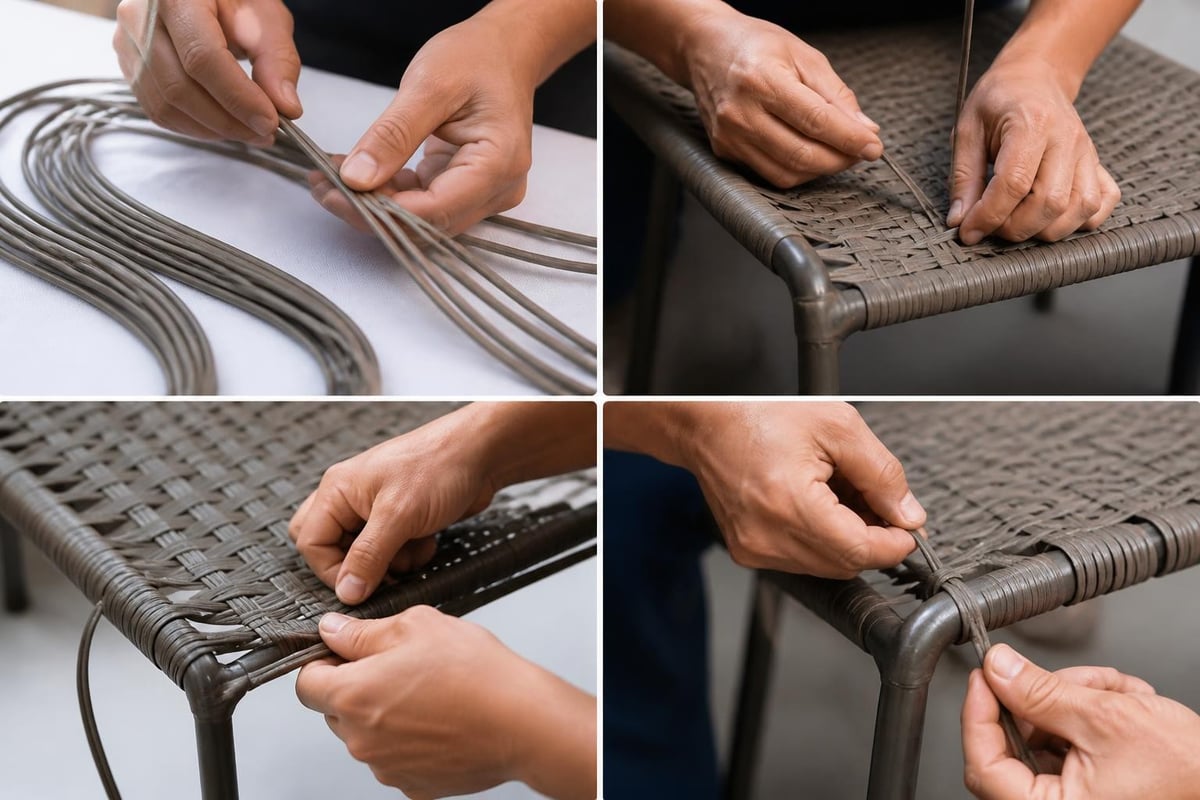
The core of wicker patio furniture repair lies in skilled reweaving. Unlike natural materials requiring soaking and manipulation, synthetic rattan demands different handling techniques and specialized tools.
Strand Removal and Preparation
Damaged sections require complete removal rather than attempted patching. Synthetic materials don't blend like natural fibers, making partial repairs visibly obvious. Professional artisans remove entire panels or sections, creating clean starting points for new weave.
Removal process steps:
- Identify logical stopping points in the weave pattern
- Carefully cut and extract damaged strands without framework harm
- Clean mounting channels and attachment points thoroughly
- Measure and order matching replacement material
- Prepare framework surfaces for optimal adhesion
The Western Cape's hospitality sector increasingly specifies particular synthetic rattan colors and textures for brand consistency. Matching existing materials requires supplier relationships and material archives that professional restoration services maintain.
Pattern Recreation and Tension Management
Synthetic rattan's rigidity compared to natural materials presents unique challenges. Material memory causes strands to resist the curves and turns required by complex weave patterns. Heat application becomes necessary for shaping, but excessive temperature damages polymer composition.
Expert restoration balances these competing demands through controlled heating, progressive tensioning, and pattern-specific techniques developed through years of hospitality furniture work. The Premium Synthetic Rattan Furniture Reweaving service exemplifies this specialized expertise, transforming sun-faded loungers and worn dining sets into guest-ready pieces through meticulous craftsmanship.
| Weave Pattern | Complexity Level | Time Investment | Durability Result |
|---|---|---|---|
| Standard Basket | Low | 2-3 hours | Very Good |
| Herringbone | Moderate | 4-6 hours | Excellent |
| Diamond Lattice | High | 6-8 hours | Superior |
| Custom Hospitality | Very High | 8-12 hours | Premium |
Temperature control proves critical. Synthetic rattan softens between 60-80°C depending on composition, but exceeding optimal ranges causes permanent deformation or discoloration. Professional heat guns with precise temperature regulation prevent these issues.
Color Restoration and Surface Treatment
Even structurally sound furniture loses guest appeal when fading and discoloration mar its appearance. Wicker patio furniture repair extends beyond structural restoration to encompass aesthetic renewal.
Cleaning and Surface Preparation
Years of outdoor exposure embed dirt, organic growth, and atmospheric pollutants deep within synthetic rattan's textured surface. Standard cleaning inadequately addresses these accumulations.
Professional restoration employs multi-stage cleaning:
- Initial power washing removes loose debris and surface contamination
- Specialized detergent application breaks down embedded oils and organic matter
- Soft brush agitation works cleaning agents into weave crevices
- High-pressure rinse eliminates all cleaning residue
- Complete drying prevents moisture entrapment before treatment
Humidity considerations matter significantly in coastal Western Cape locations. Maintaining furniture in humid climates requires attention to moisture-related challenges throughout the restoration process.
Color Matching and Application
Synthetic rattan rarely requires painting when new, but years of UV exposure fade even the most resistant materials. Color restoration presents technical challenges distinct from wood finishing.
Application considerations:
- Primer selection compatible with specific polymer types
- Paint flexibility matching substrate expansion and contraction
- UV-resistant topcoats preventing rapid re-fading
- Application techniques preventing weave gap filling
- Curing time requirements before furniture returns to service
Hotels and wine estates often maintain specific color palettes aligned with property branding. Custom color matching ensures restored pieces integrate seamlessly with existing furniture collections rather than appearing obviously refurbished.
Preventive Maintenance Strategies
Wicker patio furniture repair becomes less frequent when hospitality properties implement proactive maintenance programs. Professional restoration services often educate clients on preservation techniques that extend furniture lifespan.
Seasonal Protection Protocols
The Western Cape's distinct seasons create varying stress on outdoor furniture. Winter rainfall and summer UV intensity each demand specific responses.
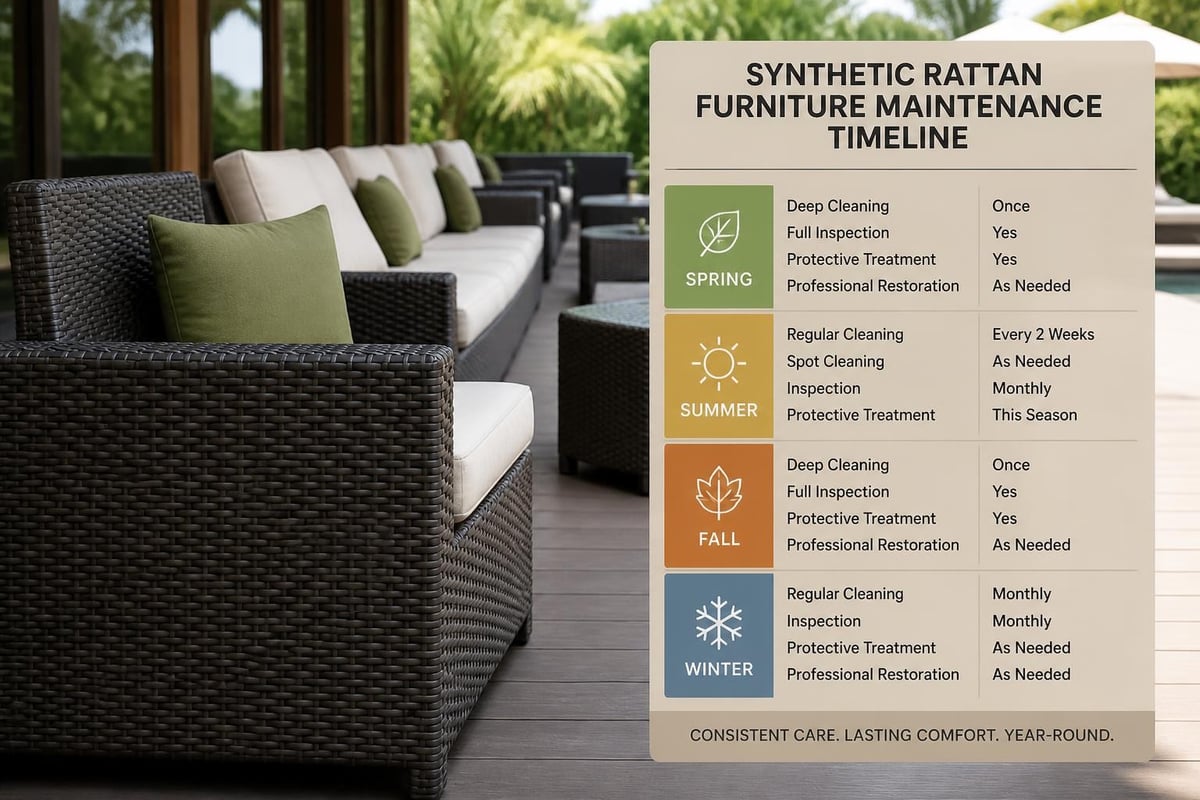
Seasonal maintenance calendar:
- Spring (September-November): Deep cleaning, structural inspection, minor repairs
- Summer (December-February): UV protectant application, weekly cleaning, shade rotation
- Autumn (March-May): Thorough assessment, restoration scheduling, protective treatments
- Winter (June-August): Coverage or storage, moisture management, off-season restoration work
Many hospitality venues schedule major restoration during winter months when outdoor spaces see reduced guest use. This timing minimizes operational disruption while ensuring furniture returns to service before peak summer season.
Daily Care Practices
Staff training significantly impacts furniture longevity. Simple daily practices prevent damage that accumulates into major restoration needs:
- Prompt cleanup of spills preventing staining and material degradation
- Gentle brushing removing debris from weave patterns
- Proper stacking techniques avoiding stress concentration
- Cushion removal during rain preventing moisture entrapment
- Regular tightening of framework connections
Common mistakes property managers make include neglecting furniture until damage becomes extensive, resulting in higher restoration costs or premature replacement.
Framework Repair and Reinforcement
While reweaving addresses visible damage, underlying framework integrity determines long-term furniture performance. Comprehensive wicker patio furniture repair evaluates and addresses structural components.
Metal Framework Restoration
Aluminum frames resist corrosion but suffer from connection loosening and surface oxidation. Steel frames, even powder-coated, eventually develop rust at stress points and coating breaches.
Framework restoration process:
- Complete weave removal exposing entire framework
- Rust treatment with chemical converters or abrasive removal
- Welding or mechanical reinforcement of failed connections
- Surface preparation through cleaning and abrading
- Protective coating application before reweaving
Coastal properties face accelerated metal degradation from salt air exposure. Specialized coatings and corrosion-resistant hardware become essential for furniture longevity in these environments.
Wood Component Renewal
Some synthetic rattan designs incorporate wooden elements for aesthetic contrast or structural support. These components require different restoration approaches than synthetic materials.
Wood exposed to Western Cape weather experiences expansion, contraction, UV degradation, and moisture damage. Professional restoration addresses these issues through replacement or renewal techniques matching the furniture's overall quality level.
Cost Analysis and Investment Justification
Hospitality property managers constantly balance restoration costs against replacement expenses. Understanding the economics of wicker patio furniture repair informs sound investment decisions.
Restoration Versus Replacement Economics
Premium synthetic rattan furniture represents significant capital investment. Quality loungers, dining sets, and seating groups cost substantially more than budget alternatives, but offer superior durability and appearance.
| Consideration | Professional Restoration | Complete Replacement |
|---|---|---|
| Upfront Cost | 30-50% of new price | 100% of new price |
| Downtime | 2-4 weeks typical | 6-12 weeks ordering |
| Environmental Impact | Minimal waste | Substantial disposal |
| Quality Result | Original build quality | Variable depending on source |
| Warranty Coverage | Restoration guarantee | New product warranty |
For established hospitality venues with specific furniture styles integral to property character, restoration preserves aesthetic continuity that replacement cannot match. Wine estates and boutique hotels particularly value this consistency.
Long-Term Value Considerations
Properly restored synthetic rattan furniture delivers years of additional service. Professional restoration includes framework reinforcement and protective treatments extending beyond the furniture's original specifications.
Calculating total cost of ownership requires considering:
- Initial furniture investment and expected lifespan
- Restoration costs at recommended intervals
- Replacement expenses if restoration is deferred
- Guest satisfaction impact of furniture condition
- Environmental sustainability commitments
Many properties discover that systematic restoration programs cost less annually than continual partial replacement while maintaining superior overall furniture quality.
Selecting Professional Restoration Services
Not all furniture repair providers possess the specialized skills required for quality synthetic rattan restoration. Hospitality properties need partners understanding both technical requirements and operational realities.
Evaluation Criteria
Key service capabilities:
- Demonstrated experience with hospitality-grade synthetic materials
- Portfolio showing before-and-after restoration results
- Understanding of commercial furniture stress and usage patterns
- Ability to match existing materials and colors precisely
- Realistic timelines respecting operational requirements
- Framework repair capabilities beyond surface reweaving
Step-by-step repair guidance helps property maintenance teams handle minor issues, but significant restoration requires professional expertise that amateur attempts cannot replicate.
Service Logistics and Communication
Hospitality environments demand service providers who minimize operational disruption. Professional restoration services offer furniture collection, off-site restoration, and coordinated delivery timed to property needs.
Clear communication throughout the process prevents surprises. Detailed assessments, accurate timelines, and proactive updates when challenges arise characterize professional service delivery. Properties managing large furniture inventories particularly value systematic approaches tracking individual pieces through restoration workflows.
Quality Standards and Guest Experience
Ultimately, wicker patio furniture repair serves guest satisfaction. Hospitality properties compete on experiential quality, where worn, damaged furniture directly undermines positioning and reviews.
Guest-Ready Standards
Professional restoration achieves results indistinguishable from new furniture through attention to details amateur repairs overlook:
- Uniform tension creating smooth surfaces without loose strands
- Precise color matching eliminating obvious repair zones
- Secure strand terminations preventing unraveling
- Structural stability supporting guest use confidently
- Clean, fresh appearance enhancing outdoor spaces
The expert restoration techniques employed by specialized services transform furniture from liability to asset, protecting property reputation while extending investment value.
Sustainability and Brand Alignment
Modern hospitality guests increasingly value environmental responsibility. Furniture restoration aligns with sustainability messaging that replacement undermines. Properties promoting eco-conscious operations gain authentic credentials through restoration programs reducing waste and resource consumption.
This alignment proves particularly relevant for wine estates, eco-lodges, and boutique properties where environmental stewardship forms core brand identity. Restoration becomes not merely cost management but values expression.
Professional wicker patio furniture repair preserves hospitality investments while maintaining the guest experience standards that drive positive reviews and repeat bookings. Whether your property features a single outdoor dining area or extensive poolside lounging spaces, systematic restoration delivers better economics and sustainability outcomes than continuous replacement. Rattan Furniture Restoration brings specialized expertise to hotels, guesthouses, wine farms, and luxury residences throughout the Western Cape, transforming weathered pieces into guest-ready furniture through skilled reweaving and comprehensive restoration services.