
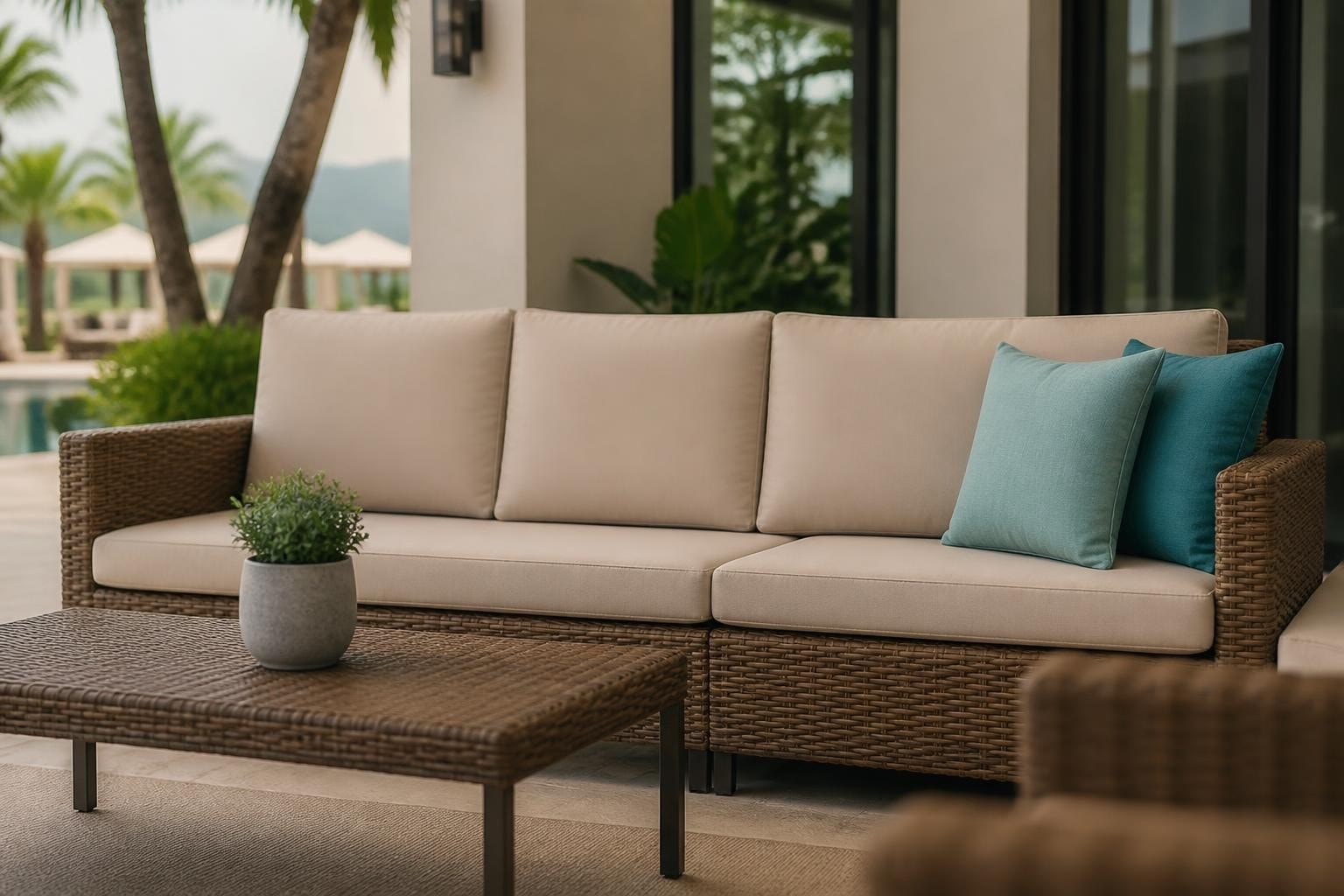
Rattan settee cushions play a pivotal role in defining the comfort, aesthetic appeal, and longevity of outdoor furniture in hospitality venues across the Western Cape. For hotels, guesthouses, wine farms, and lodges, these cushions represent far more than simple seating accessories-they directly impact guest satisfaction, property reputation, and operational costs. Understanding how to select, maintain, and replace rattan settee cushions ensures your furniture remains guest-ready while maximizing your investment in quality outdoor furnishings.
Understanding Rattan Settee Cushions for Hospitality Settings
Rattan settee cushions serve as the critical interface between your guests and your furniture. In commercial environments, these cushions endure significantly higher usage rates than residential counterparts, facing continuous exposure to sun, moisture, guest turnover, and varying weather conditions.
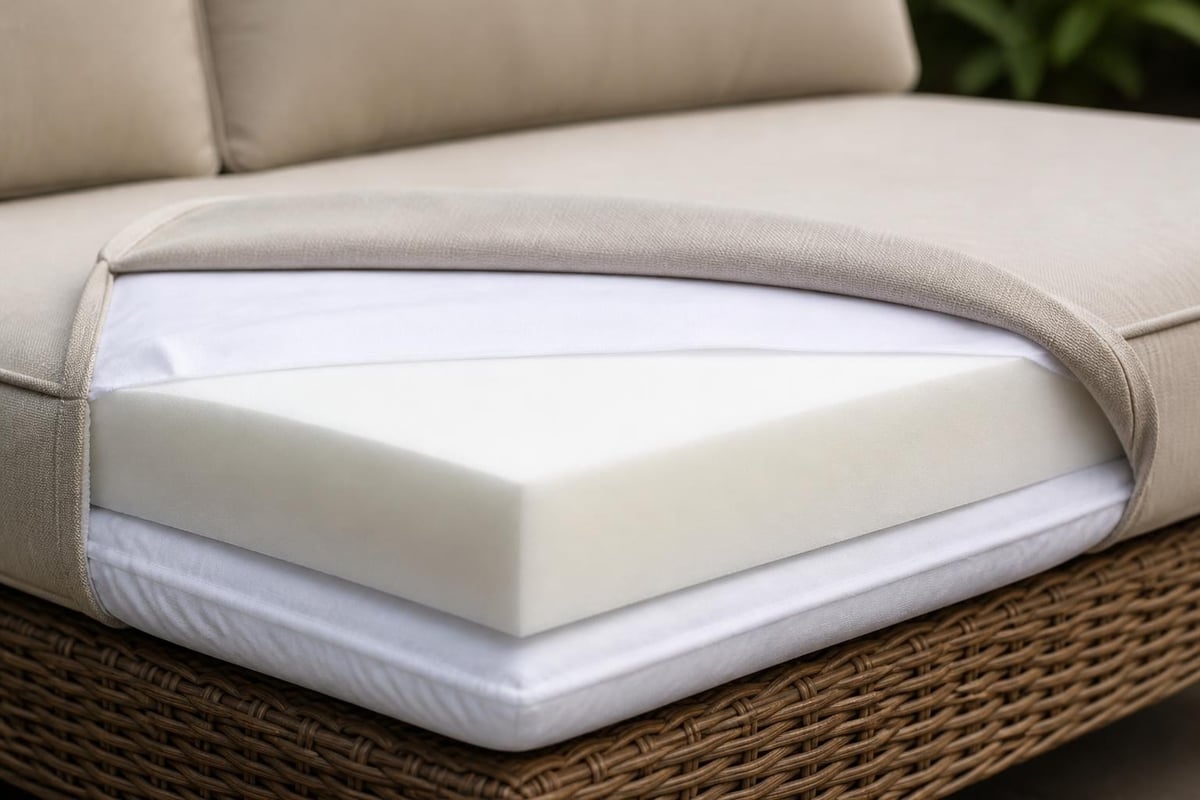
The Composition of Quality Cushions
High-performance rattan settee cushions typically feature three essential components that determine their durability and comfort:
- Core materials: High-density foam or polyester fiberfill that maintains shape under repeated compression
- Fabric covers: Weather-resistant textiles engineered to withstand UV exposure and moisture
- Protective treatments: Water-repellent coatings and anti-microbial finishes that extend cushion life
The distinction between residential and commercial-grade cushions becomes immediately apparent in high-traffic hospitality environments. Premium cushions designed for commercial use incorporate reinforced stitching, solution-dyed acrylic fabrics, and quick-drying foam cores that resist mold and mildew formation.
Performance Requirements for Commercial Environments
Hospitality venues require rattan settee cushions that meet stringent performance standards. Guest comfort demands cushions maintain their shape and support despite continuous daily use throughout peak seasons.
| Performance Factor | Residential Standard | Hospitality Standard |
|---|---|---|
| UV Resistance | 500-1000 hours | 2000+ hours |
| Water Resistance | Light protection | Full weatherproofing |
| Density (foam) | 1.5-2.0 lbs/ft³ | 2.5-3.5 lbs/ft³ |
| Fabric Durability | 15,000 double rubs | 50,000+ double rubs |
| Color Fastness | Grade 3-4 | Grade 5 |
The best outdoor cushions for rattan furniture prioritize materials specifically engineered for extended outdoor exposure. Solution-dyed acrylic fabrics, such as Sunbrella or similar commercial-grade textiles, resist fading far better than printed alternatives while maintaining color vibrancy season after season.
Selecting the Right Cushions for Your Rattan Settees
Choosing appropriate rattan settee cushions requires balancing aesthetic preferences with practical performance considerations. Your selection directly affects maintenance costs, replacement frequency, and guest experience quality.
Measurement and Sizing Precision
Proper cushion fit prevents shifting, gaps, and premature wear. Measure your rattan settee dimensions carefully, accounting for:
- Seat depth: Distance from front edge to backrest
- Seat width: Total horizontal measurement across the settee
- Back height: Vertical measurement for backrest cushions
- Arm dimensions: If applicable, measure armrest surface areas
- Thickness requirements: Determine appropriate cushion depth based on frame design
Custom-fitted cushions eliminate common problems associated with generic sizing. Standard cushions often shift during use, creating an unprofessional appearance and reducing comfort. For hospitality venues, investing in properly sized rattan settee cushions translates to fewer adjustments, enhanced aesthetics, and improved guest satisfaction.
Fabric Selection Strategies
The fabric covering your rattan settee cushions determines both visual appeal and functional performance. Commercial environments benefit from specific fabric characteristics:
- Solution-dyed acrylics: Color integrated throughout fiber, not surface-applied
- Marine-grade vinyls: Exceptional water resistance for poolside applications
- Performance polyesters: Budget-friendly options with moderate durability
- Outdoor canvas: Heavy-duty cotton blends with water-repellent treatments
Color selection extends beyond aesthetic preference. Lighter colors show staining more readily but reflect heat, keeping cushions cooler. Darker colors conceal minor stains but absorb more heat. Many hospitality venues opt for mid-tone neutrals with subtle patterns that balance practicality with visual interest.
The importance of deep seating rattan furniture and cushions cannot be overstated for guest comfort. Thicker cushions-typically 4 to 6 inches for seat cushions-provide superior comfort during extended sitting periods common in resort and wine farm settings.
Maintenance Protocols for Extended Cushion Life
Proper maintenance significantly extends the serviceable life of rattan settee cushions while maintaining their guest-ready appearance. Establishing systematic care protocols reduces replacement costs and preserves your property's visual standards.
Daily and Weekly Care Routines
Consistent maintenance prevents minor issues from becoming major problems:
Daily tasks:
- Shake or brush off loose debris, leaves, and surface dust
- Spot-clean spills immediately with mild soap solution
- Flip cushions to promote even wear distribution
- Store cushions during inclement weather when possible
Weekly maintenance:
- Vacuum cushion surfaces using upholstery attachment
- Inspect for stains, tears, or deteriorating seams
- Clean fabric with manufacturer-approved cleaning solutions
- Allow cushions to air thoroughly after any moisture exposure
For venues near the coast or pool areas, salt and chlorine exposure accelerates fabric degradation. Weekly rinsing with fresh water removes these damaging compounds before they compromise fabric integrity.
Deep Cleaning and Stain Removal
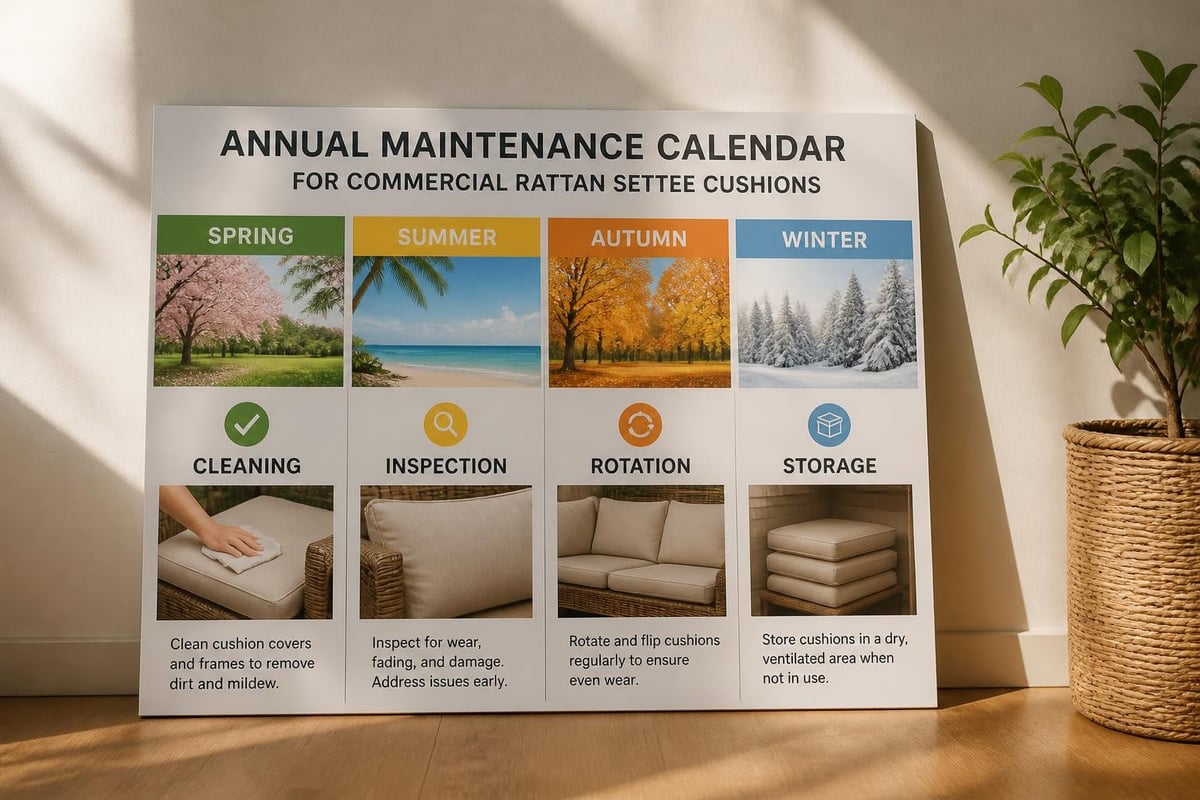
Quarterly deep cleaning maintains cushion appearance and hygiene standards expected in hospitality environments. Professional cleaning services offer convenience, but many venues successfully manage in-house cleaning using appropriate techniques.
| Stain Type | Treatment Method | Products to Use |
|---|---|---|
| Food/beverage | Blot immediately, clean with mild detergent | Dish soap, warm water |
| Sunscreen/oil | Pre-treat with degreaser, wash thoroughly | Commercial degreaser, soft brush |
| Mold/mildew | Clean with vinegar solution, sun-dry completely | White vinegar, water (1:1 ratio) |
| Red wine | Blot, apply salt immediately, clean with oxygen cleaner | Salt, oxygen-based stain remover |
| Ink/marker | Treat with rubbing alcohol, blot gently | Isopropyl alcohol, clean cloth |
Following replacement cushions guidance helps identify when maintenance efforts no longer suffice and replacement becomes necessary. Persistent odors, visible foam deterioration, or fabric tears beyond repair signal replacement time.
Replacement Considerations and Timing
Even premium rattan settee cushions eventually require replacement. Recognizing replacement indicators prevents guest dissatisfaction while optimizing replacement timing for budget efficiency.
Signs Your Cushions Need Replacement
Professional hospitality managers monitor specific deterioration indicators:
- Compression loss: Cushions no longer return to original thickness after sitting
- Fabric breakdown: Visible thinning, tears, or separating seams
- Color degradation: Severe fading that creates inconsistent appearance
- Persistent odors: Musty smells indicating internal mold growth
- Water absorption: Cushions remain wet hours after exposure
Replacing cushions before complete failure maintains property standards and prevents negative guest reviews. Budget-conscious venues often implement phased replacement strategies, addressing highest-visibility areas first while rotating less-worn cushions to prominent locations.
Cost-Benefit Analysis of Replacement vs. Restoration
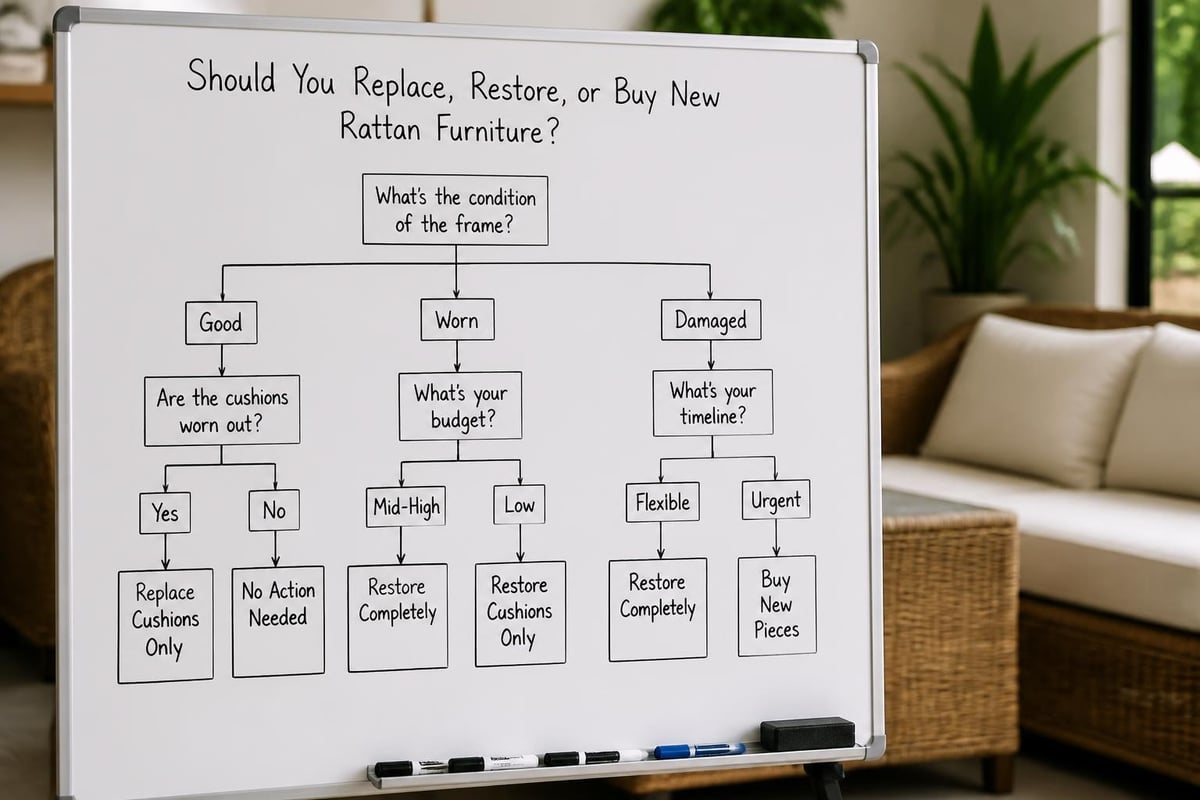
When your rattan furniture frames remain structurally sound, replacing only the cushions delivers exceptional value. However, comprehensive evaluation should consider the overall furniture condition.
Hospitality venues with aging rattan furniture might benefit from professional restoration services that address both structural integrity and aesthetic concerns. Premium Synthetic Rattan Furniture Reweaving can transform sun-faded, worn pieces back to guest-ready condition, often at a fraction of replacement costs. This approach proves particularly valuable for distinctive or custom pieces that define your venue's character.
Sourcing Quality Replacement Cushions
Three primary sourcing options exist for replacement rattan settee cushions:
- Manufacturer direct: Original equipment manufacturers ensure perfect fit and matching
- Custom fabricators: Local upholsterers create tailored solutions for unique requirements
- Commercial suppliers: Bulk purchasing from hospitality furniture specialists
For unique or vintage rattan settees, custom fabrication often provides the only viable path to properly fitted cushions. Working with experienced fabricators familiar with hospitality requirements ensures appropriate material selection and construction quality.
Design Trends and Aesthetic Considerations
Rattan settee cushions significantly influence your property's visual identity. Current design trends in hospitality environments reflect broader shifts toward natural materials, sustainable practices, and biophilic design principles.
Color Palettes for 2026
Contemporary hospitality design favors earth-toned cushions that complement rattan's natural aesthetic while providing visual warmth:
- Warm neutrals: Terracotta, sand, warm gray, natural linen
- Coastal blues: Navy, denim, aqua, seafoam
- Organic greens: Sage, olive, forest, eucalyptus
- Accent combinations: Layering solids with subtle geometric patterns
The enduring appeal of rattan in outdoor furniture creates design opportunities that blend classic elegance with modern functionality. Many wine farms and boutique lodges leverage this aesthetic to create Instagram-worthy spaces that enhance their marketing efforts while providing genuine guest comfort.
Pattern and Texture Integration
While solid colors dominate commercial applications for their versatility and stain-concealing properties, strategic pattern use creates visual interest:
- Geometric patterns: Modern appeal, work well in contemporary settings
- Botanical prints: Natural themes complement garden and vineyard environments
- Striped designs: Classic choice that adds visual rhythm to seating arrangements
- Textured solids: Provide depth without pattern commitment
Mixing cushion styles across your property creates distinct zones while maintaining cohesive design language. Poolside areas might feature marine-inspired blues, while garden seating areas embrace botanical greens, all unified through consistent fabric quality and complementary color relationships.
Storage and Seasonal Management
Proper storage during off-seasons or inclement weather substantially extends rattan settee cushion life, particularly important for properties experiencing Western Cape's variable climate conditions.
Storage Best Practices
Effective cushion storage requires attention to environmental conditions:
Preparation steps:
- Clean cushions thoroughly and allow complete drying
- Inspect for needed repairs before storage
- Apply fabric protector spray for additional moisture resistance
- Document cushion locations for proper redistribution
Storage environment requirements:
- Dry, well-ventilated space preventing moisture accumulation
- Protection from direct sunlight to prevent unnecessary UV exposure
- Rodent-proof containers or elevated storage preventing pest damage
- Temperature-controlled areas when possible, avoiding extreme heat or cold
Many hospitality venues invest in weatherproof storage containers specifically designed for outdoor cushions. These solutions provide protection while remaining accessible for quick deployment when weather improves or guest needs require.
Rotation Strategies for Even Wear
Implementing cushion rotation protocols distributes wear evenly across your inventory:
- Monthly rotation: Move cushions between high-traffic and low-traffic areas
- Seasonal swapping: Replace heavily used cushions with stored alternatives
- Position changes: Flip and reverse cushions regularly to prevent one-sided compression
- Documentation: Track cushion locations and usage patterns for informed replacement decisions
Systematic rotation extends overall cushion life by 30-50% compared to fixed placement strategies. For venues with extensive outdoor seating, this translates to significant cost savings and more predictable replacement budgets.
Safety and Compliance Considerations
Commercial rattan settee cushions must meet specific safety and regulatory standards, particularly for hospitality environments serving diverse guest populations.
Fire Safety Requirements
Many jurisdictions require commercial outdoor furniture cushions meet specific fire resistance standards. California TB117-2013 and UK BS 7176 represent common benchmarks, though requirements vary by location and venue type.
Fire-resistant cushions incorporate:
- Flame-retardant foam cores meeting safety standards
- FR-treated fabric covers preventing rapid fire spread
- Barriers between foam and fabric enhancing fire resistance
- Certification documentation proving compliance
Verify local requirements with fire marshals or regulatory authorities. Non-compliance creates liability exposure and potentially voids insurance coverage following fire-related incidents.
Accessibility and Universal Design
Guest comfort extends beyond cushion softness. Consider accessibility needs when selecting rattan settee cushions:
- Firmness levels: Balance comfort with ease of standing for mobility-limited guests
- Cushion height: Affects seated height and transfer difficulty
- Slip resistance: Fabric texture should prevent excessive shifting
- Contrast colors: Visual distinction between seating surfaces and surroundings aids visually impaired guests
Properties marketed to senior travelers or those prioritizing accessibility should particularly emphasize these factors during cushion selection.
Environmental and Sustainability Factors
Sustainability increasingly influences purchasing decisions in hospitality sectors, with rattan settee cushions presenting opportunities for environmental responsibility demonstration.
Eco-Friendly Material Options
Several sustainable cushion materials align with environmental goals:
- Recycled polyester fills: Repurposed plastic bottles reduce waste
- Natural latex foam: Renewable resource with biodegradable properties
- Organic cotton covers: Pesticide-free cultivation reduces environmental impact
- Solution-dyed fabrics: Reduced water consumption compared to traditional dyeing
Marketing your environmental commitment through sustainable cushion choices resonates with eco-conscious travelers who specifically seek properties demonstrating genuine environmental stewardship. Guest communication highlighting these choices through property materials or website content reinforces your brand values.
Circular Economy Approaches
Rather than discarding worn cushions, consider alternative lifecycle extensions:
- Recovering services: Replace fabric covers while retaining serviceable foam cores
- Foam replacement: Install new cores in intact covers
- Donation programs: Retired cushions serve community organizations or staff housing
- Recycling partnerships: Work with textile recyclers processing end-of-life materials
These approaches reduce waste while potentially lowering replacement costs. Some venues repurpose retired cushions for staff areas or back-of-house applications, extracting maximum value from initial investments.
Budget Planning and Investment Strategies
Strategic financial planning for rattan settee cushions ensures adequate funding while optimizing replacement timing for operational efficiency.
Lifecycle Costing Analysis
Understanding total ownership costs guides smarter purchasing decisions:
| Cost Factor | Budget Option | Premium Option |
|---|---|---|
| Initial purchase | $75-150 per cushion | $200-400 per cushion |
| Expected lifespan | 2-3 years | 5-7 years |
| Annual maintenance | $15-25 per cushion | $10-15 per cushion |
| Total 6-year cost | $255-525 | $260-490 |
| Replacement frequency | 2-3 times | Once or none |
Premium cushions often deliver superior value despite higher initial costs. Reduced replacement frequency minimizes operational disruption, labor costs, and inventory management complexity.
Establishing Replacement Reserves
Financial planning should incorporate cushion replacement into capital improvement budgets. Properties with 50 rattan settees requiring 100-150 cushions face significant replacement expenses when addressed simultaneously.
Recommended approach:
- Calculate total cushion inventory value
- Divide by expected lifespan to determine annual reserve amount
- Add 15-20% contingency for unexpected replacement needs
- Review and adjust annually based on actual wear patterns
This methodology prevents financial surprises while ensuring funds availability when replacement becomes necessary. For properties offering bespoke restoration services, coordinating cushion replacement with furniture refurbishment creates operational efficiencies.
Regional Considerations for Western Cape Properties
Western Cape's unique climate presents specific challenges for rattan settee cushions requiring localized strategies.
Climate-Specific Challenges
Properties across the Western Cape encounter variable conditions:
- Coastal properties: Salt air accelerates fabric deterioration and hardware corrosion
- Wine country locations: Significant temperature fluctuations between day and night
- Mountain lodges: Intense UV exposure at higher elevations
- Urban guesthouses: Pollution and dust accumulation requiring frequent cleaning
Understanding your microclimate guides appropriate cushion selection and maintenance protocols. Coastal venues prioritize marine-grade materials, while high-altitude properties emphasize UV resistance.
Seasonal Usage Patterns
Western Cape tourism patterns influence cushion wear:
Peak season (November-March):
- Maximum daily usage and guest turnover
- Increased sun exposure and heat damage
- Higher spill and stain frequency
- Greater need for daily maintenance
Off-season (May-August):
- Reduced usage allows thorough cleaning and repairs
- Ideal storage period for cushions in weather-exposed areas
- Opportunity for rotation and inventory assessment
- Planning window for replacement purchases
Aligning cushion management with seasonal patterns optimizes both guest experience and operational efficiency.
Selecting and maintaining rattan settee cushions represents a critical investment in guest comfort, property aesthetics, and long-term operational efficiency for hospitality venues. By prioritizing quality materials, implementing systematic maintenance protocols, and planning strategically for replacement, you ensure your outdoor spaces remain inviting and guest-ready throughout the year. When your rattan furniture itself shows signs of wear, Rattan Furniture Restoration specializes in restoring synthetic rattan pieces to their original beauty, combining expert reweaving with comprehensive refurbishment that makes your furniture look new again. Contact us to discover how professional restoration can transform your tired outdoor furniture into stunning, durable pieces worthy of your hospitality standards.