
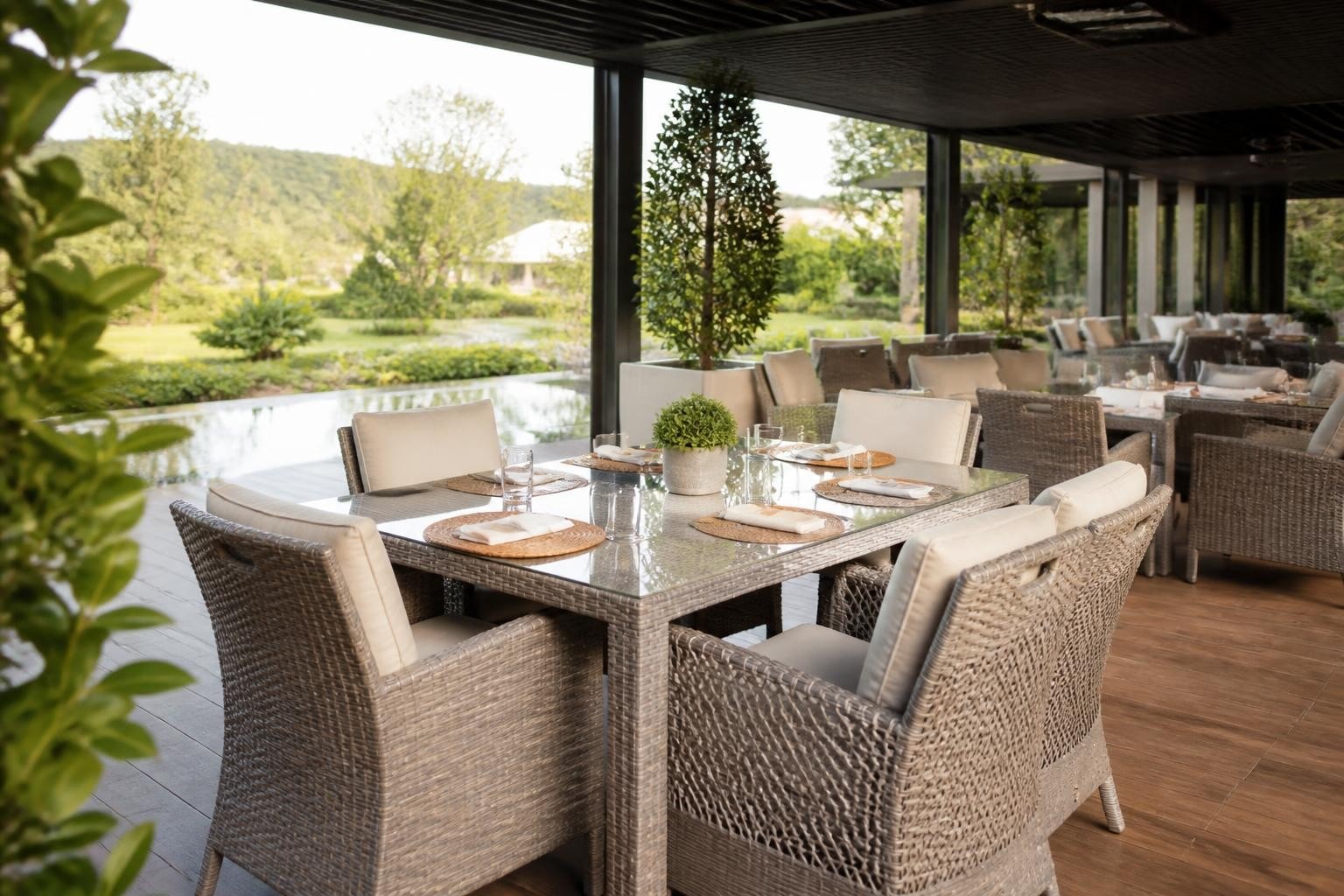
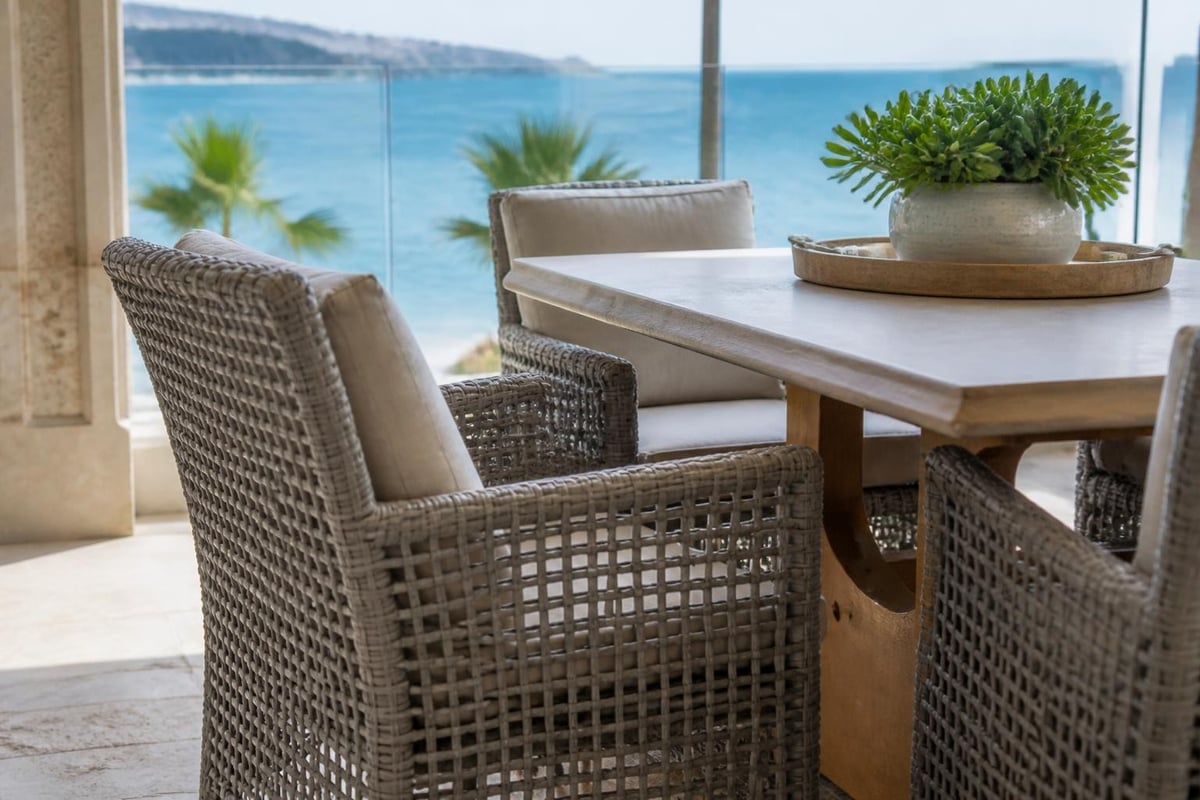
A rattan dining set serves as the cornerstone of outdoor hospitality spaces, combining natural aesthetics with exceptional durability. For hotels, guesthouses, wine farms, and lodges across the Western Cape, these versatile furniture pieces create inviting dining experiences that withstand coastal weather and heavy guest use. Understanding the characteristics, maintenance requirements, and restoration options for synthetic rattan furniture ensures your investment delivers lasting value while maintaining the premium appearance your guests expect.
Understanding Synthetic Rattan Construction and Benefits
Synthetic rattan has revolutionized outdoor furniture design since its introduction to the hospitality market. Unlike natural materials that deteriorate quickly in variable climates, modern synthetic alternatives deliver consistent performance year after year.
Material Composition and Weather Resistance
High-quality synthetic rattan consists of high-density polyethylene (HDPE) or polyvinyl chloride (PVC) woven around aluminum or steel frames. This construction method creates furniture that resists UV degradation, moisture absorption, and temperature fluctuations that typically damage outdoor furnishings.
Key durability factors include:
- UV-stabilized polymers that prevent sun-induced fading and brittleness
- Non-porous surfaces that resist mold, mildew, and bacterial growth
- Flexible weaving materials that accommodate thermal expansion without cracking
- Corrosion-resistant metal frames that maintain structural integrity in coastal environments
The elegance and durability of rattan dining sets make them particularly suitable for Western Cape hospitality venues where furniture faces intense summer sun and winter moisture. A properly manufactured rattan dining set withstands these conditions while maintaining its visual appeal for 7-10 years with minimal maintenance.
Design Versatility for Hospitality Settings
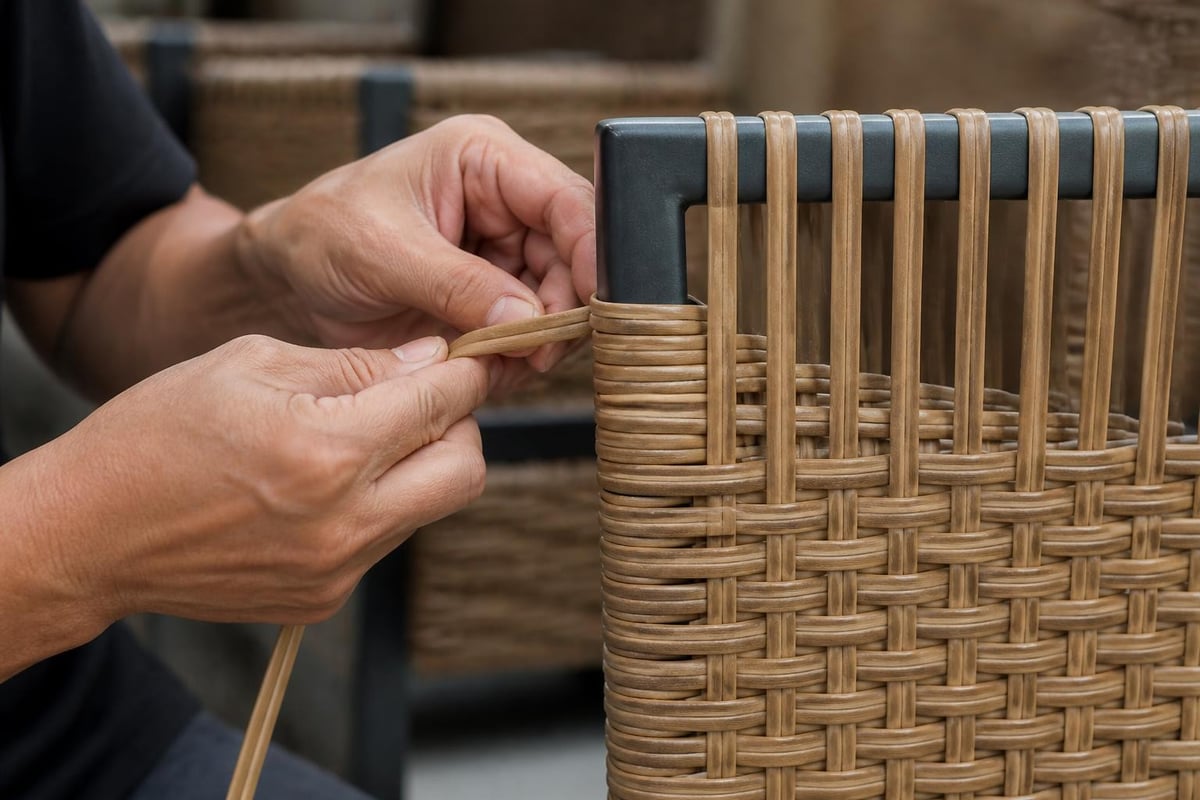
Modern synthetic rattan furniture accommodates diverse aesthetic preferences from traditional Cape Dutch to contemporary minimalist designs. Manufacturers offer various weave patterns, colors, and finishes that complement existing architectural elements while creating cohesive outdoor dining environments.
| Design Element | Options Available | Hospitality Application |
|---|---|---|
| Weave Pattern | Flat, round, half-round | Visual texture coordination |
| Color Palette | Natural browns, grays, blacks, custom tones | Brand identity alignment |
| Frame Style | Curved, geometric, traditional | Architectural harmony |
| Cushion Integration | Fixed, removable, waterproof | Guest comfort optimization |
Wine estates benefit particularly from earth-tone rattan dining sets that blend with vineyard landscapes, while boutique hotels often select contemporary gray or black finishes that project sophisticated urban aesthetics.
Selecting the Right Rattan Dining Set Configuration
Choosing appropriate furniture configurations requires careful consideration of space dimensions, guest capacity, and operational workflows. The wrong sizing or arrangement compromises both functionality and guest experience.
Space Planning and Capacity Management
Calculate your outdoor dining area dimensions before selecting furniture pieces. Each dining position requires approximately 24 inches of table edge plus 36 inches of clearance behind chairs for comfortable seating and staff service access.
Standard rattan dining set configurations:
- Four-seater sets: Ideal for intimate guesthouses and boutique lodge terraces (requires 8x8 foot minimum space)
- Six-seater sets: Perfect for family-focused wine farm restaurants (requires 10x10 foot minimum space)
- Eight-seater sets: Suited for hotel courtyard dining and group accommodations (requires 12x12 foot minimum space)
- Modular configurations: Flexible arrangements for variable party sizes and seasonal capacity adjustments
Guesthouses typically invest in multiple four and six-seater sets to accommodate different party sizes while maintaining visual consistency across their outdoor spaces. This approach provides operational flexibility without requiring extensive furniture storage.
Frame Quality and Construction Details
The longevity of any rattan dining set depends primarily on frame construction quality. Inspect welding points, joint reinforcement, and material gauge before making purchasing decisions.
Premium hospitality-grade furniture features:
- Powder-coated aluminum frames that resist rust in coastal humidity
- Reinforced corner brackets at stress points where legs meet table surfaces
- Adjustable leveling feet that accommodate uneven patio surfaces
- Double-wrapped weaving at edges where wear typically occurs first
When buying rattan dining sets, prioritize manufacturers who offer detailed construction specifications and multi-year commercial warranties. Budget options that lack these quality indicators typically require replacement within 2-3 seasons rather than delivering the 7-10 year lifespan expected from premium pieces.
Maintenance Protocols for Commercial Settings
Regular maintenance extends furniture lifespan while preserving the pristine appearance guests expect from premium hospitality venues. Establishing systematic cleaning and inspection routines prevents minor issues from developing into expensive repairs or premature replacements.
Daily and Weekly Cleaning Procedures
Outdoor dining furniture accumulates dust, pollen, food residue, and environmental debris that accelerates wear patterns. Implement simple cleaning protocols that housekeeping staff can execute efficiently.
Daily maintenance tasks:
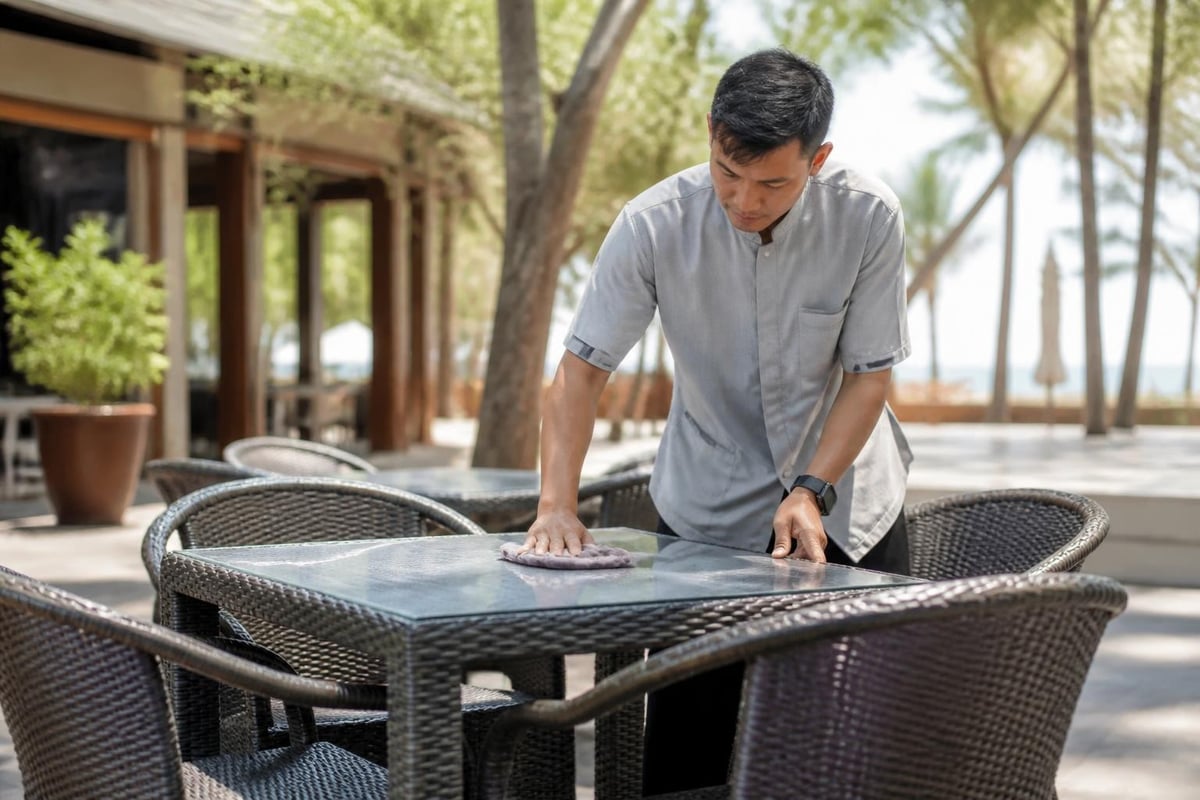
- Wipe down tables and chairs with damp microfiber cloths after each service period
- Remove cushions during rain to prevent water retention and mold growth
- Check frame stability and tighten any loose connections
- Clear debris from weave crevices using soft-bristle brushes
Weekly deep cleaning:
- Mix mild dish soap with warm water (avoid harsh chemicals that degrade synthetic materials)
- Scrub all surfaces using soft brushes, paying attention to weave intersections
- Rinse thoroughly with clean water to remove soap residue
- Allow complete air drying before replacing cushions or resuming service
The methods for cleaning outdoor furniture apply equally to synthetic materials, though modern rattan tolerates more aggressive cleaning than delicate natural fibers. Avoid pressure washers that can dislodge weaving or damage protective coatings.
Seasonal Inspection and Preventive Care
Conduct comprehensive inspections quarterly to identify developing issues before they impact guest experience or require extensive repairs. Focus on high-stress areas where problems typically emerge first.
| Inspection Area | Common Issues | Prevention Strategy |
|---|---|---|
| Weave integrity | Loosening, unraveling at edges | Reinforce with adhesive, schedule reweaving |
| Frame joints | Corrosion, loose connections | Apply protective coating, tighten hardware |
| Leg stability | Wobbling, uneven contact | Adjust leveling feet, replace worn components |
| Cushion condition | Fading, water damage, compression | Rotate regularly, store during off-season |
Winter weather in the Western Cape presents particular challenges for outdoor furniture. While synthetic rattan withstands moisture better than natural materials, consistent exposure to rain and wind accelerates wear patterns. Consider protective covers during extended rainy periods or relocate furniture to covered areas when possible.
Restoration Versus Replacement Decision Making
Hospitality operators face critical decisions when furniture shows visible wear. Understanding when restoration delivers better value than replacement requires analyzing damage extent, restoration costs, and remaining furniture lifespan.
Assessing Damage Severity and Restoration Potential
Not all damaged furniture warrants replacement. Many issues that appear significant actually respond well to professional restoration services. Expert assessment distinguishes between cosmetic concerns and structural failures that compromise safety.
Restoration-suitable conditions:
- Sun-faded coloring that affects appearance but not structural integrity
- Loosened weaving that can be reinforced or rewoven
- Minor frame corrosion that hasn't compromised metal integrity
- Worn cushions requiring replacement while frames remain sound
Replacement-required conditions:
- Severely corroded frames with structural instability
- Extensive weave deterioration across multiple furniture pieces
- Broken frame components that cannot be safely repaired
- Cost of restoration exceeding 70% of replacement value
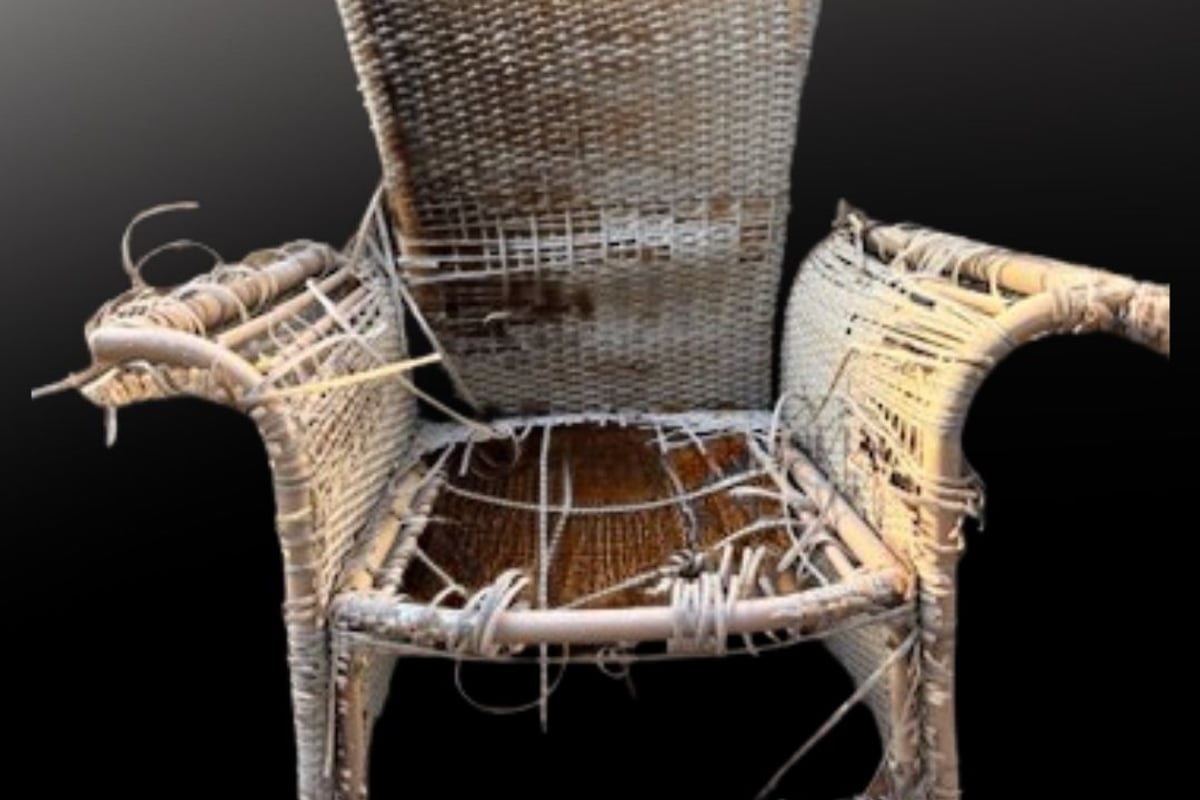
Professional restoration services deliver particular value for high-quality rattan dining sets that feature premium construction. Premium Syntetic Rattan Furniture Reweaving extends furniture lifespan by addressing cosmetic and moderate structural issues while maintaining the original quality you invested in initially.
Cost-Benefit Analysis for Hospitality Operators
Calculate total ownership costs rather than focusing solely on initial purchase prices. A comprehensive financial analysis includes purchase price, expected lifespan, maintenance expenses, and eventual replacement timing.
Sample 10-year cost comparison:
- Budget furniture approach: Purchase at R15,000, replace every 3 years = R50,000 total investment plus disposal costs
- Premium furniture with restoration: Purchase at R35,000, restore at year 5 for R8,000 = R43,000 total investment with superior guest experience throughout
Quality furniture combined with strategic restoration typically delivers better long-term value while maintaining consistent aesthetic standards that reinforce brand positioning. Budget alternatives require more frequent replacement, creating operational disruptions and inconsistent guest experiences.
Design Integration and Aesthetic Considerations
Rattan dining sets contribute significantly to overall ambiance and guest perception. Thoughtful selection and arrangement transforms functional dining spaces into memorable experiences that encourage positive reviews and repeat bookings.
Creating Cohesive Outdoor Environments
The versatility of rattan in design extends beyond individual furniture pieces to comprehensive outdoor room concepts. Consider how dining sets interact with architectural elements, landscaping, and other furnishings.
Design coordination elements:
- Color harmony: Match rattan tones to building materials, cushion fabrics, and surrounding landscape features
- Scale appropriateness: Select furniture proportions that complement space dimensions without overwhelming or underwhelming the area
- Style consistency: Align modern, traditional, or transitional aesthetics across all outdoor furnishings
- Functional zoning: Arrange dining areas to create intimate spaces within larger terraces or courtyards
Wine farms achieve particularly striking results by positioning natural-toned rattan dining sets against vineyard backdrops, creating seamless transitions between cultivated landscapes and guest amenities. Boutique hotels in urban settings often contrast sleek black or gray synthetic rattan against contemporary architecture for sophisticated modern aesthetics.
Cushion Selection and Comfort Optimization
While frame quality determines longevity, cushion selection directly impacts guest comfort during extended dining experiences. Premium hospitality cushions balance weather resistance with comfort and visual appeal.
| Cushion Feature | Standard Option | Premium Option | Hospitality Recommendation |
|---|---|---|---|
| Fabric Material | Basic polyester | Solution-dyed acrylic | Premium for colorfastness |
| Foam Density | 1.5 lb density | 2.0+ lb density | Higher density for longevity |
| Water Resistance | Water-resistant coating | Waterproof construction | Waterproof for coastal climates |
| UV Protection | Moderate fade resistance | High UV stability rating | Maximum protection essential |
Invest in removable cushion covers that accommodate periodic cleaning and eventual replacement without discarding foam inserts. This approach reduces long-term costs while maintaining consistent comfort standards.
Sustainability and Long-Term Value Creation
Environmental consciousness increasingly influences guest preferences and booking decisions. Synthetic rattan furniture, when properly maintained and restored, delivers sustainability advantages that align with modern hospitality values.
Environmental Benefits of Restoration Services
Furniture restoration dramatically reduces environmental impact compared to replacement cycles that generate waste and consume manufacturing resources. Each restored rattan dining set prevents substantial materials from entering landfills while avoiding the carbon emissions associated with new product manufacturing and transportation.
Sustainability metrics:
- Average rattan dining set weight: 45-65 kilograms that would otherwise require disposal
- Manufacturing carbon footprint: 150-200 kg CO2 equivalent per new dining set
- Transportation emissions: Additional 30-50 kg CO2 for international furniture shipping
- Landfill space conservation: 2-3 cubic meters per avoided replacement
Hospitality operators pursuing green certifications or sustainability positioning benefit from documenting restoration initiatives in environmental reports. Guests increasingly value accommodations that demonstrate tangible environmental commitments beyond superficial greenwashing.
Marketing Restored Furniture as Brand Differentiation
Transform restoration practices from operational necessities into marketing advantages. Today's travelers, particularly younger demographics, actively seek accommodations that prioritize sustainability and responsible resource management.
Communication strategies:
- Feature before-and-after restoration photos in social media content demonstrating craftsmanship
- Include sustainability narratives in property descriptions highlighting furniture longevity
- Create behind-the-scenes content showing local artisans performing restoration work
- Quantify environmental impact avoided through restoration versus replacement
Wine estates benefit particularly from sustainability messaging that aligns furniture care practices with viticulture's connection to land stewardship. The complete guide to rattan outdoor dining sets emphasizes how quality furniture investments support both operational efficiency and environmental responsibility.
Operational Considerations for Hospitality Venues
Beyond aesthetics and durability, rattan dining sets impact daily operations through space efficiency, maintenance requirements, and guest flow patterns. Strategic furniture selection and arrangement optimizes staff productivity while enhancing guest experiences.
Furniture Mobility and Seasonal Flexibility
Synthetic rattan's relatively light weight compared to solid wood or metal alternatives provides operational advantages for venues that modify configurations seasonally or for special events.
Mobility benefits:
- Two staff members can safely relocate four-seater sets without equipment
- Quick reconfiguration accommodates private events, wedding receptions, and seasonal capacity adjustments
- Simplified deep cleaning when furniture can be temporarily relocated
- Protected storage during extreme weather or off-season closures
Lodges and guesthouses with variable occupancy appreciate the flexibility to expand or contract dining capacity without maintaining excessive furniture inventory. Stack-friendly chairs and nesting tables maximize storage efficiency during low-occupancy periods.
Staff Training and Care Protocols
Implement comprehensive training programs ensuring all staff understand proper furniture handling and maintenance procedures. Preventable damage often results from well-intentioned but incorrect cleaning methods or rough handling during reconfiguration.
Essential training topics:
- Proper lifting techniques that prevent frame stress and weave damage
- Approved cleaning products and methods specific to synthetic rattan
- Inspection procedures for identifying developing issues before they worsen
- Reporting protocols for damage requiring professional attention
Create simple visual guides posted in staff areas showing correct maintenance procedures. Hospitality staff turnover necessitates easily accessible reference materials that maintain consistency regardless of individual experience levels.
Regional Considerations for Western Cape Properties
The Western Cape's unique climate patterns, guest demographics, and competitive landscape create specific requirements for outdoor furniture selection and maintenance. Understanding regional factors optimizes investment decisions and operational practices.
Climate-Specific Durability Requirements
Western Cape weather varies dramatically from coastal humidity and salt exposure to interior heat and UV intensity. Furniture specifications should address the specific environmental stresses present at your property location.
Coastal properties require:
- Enhanced corrosion resistance through marine-grade aluminum frames
- More frequent inspection and maintenance schedules
- Protective measures during winter storm seasons
- Salt-resistant finishes on all metal components
Interior properties prioritize:
- Maximum UV protection in synthetic rattan materials
- Heat-resistant cushion fabrics that don't retain excessive warmth
- Drought-tolerant maintenance approaches during water restrictions
- Dust and pollen management in drier climates
Properties throughout the Western Cape can access expert restoration services that understand regional climate challenges and specify appropriate materials and maintenance approaches for local conditions.
Competitive Positioning Through Furniture Quality
Guest expectations in the Western Cape hospitality market continue rising as international travel returns and domestic tourism grows. Outdoor dining spaces significantly influence booking decisions and review scores, making furniture quality a competitive differentiator.
Premium rattan dining sets signal attention to detail that extends throughout the guest experience. Properties that invest in quality furnishings and maintain them meticulously consistently achieve higher review ratings and command premium pricing compared to competitors with worn or budget furniture.
Quality indicators guests notice:
- Consistent color without fading or discoloration
- Tight weaving without loose or unraveling sections
- Stable frames without wobbling or squeaking
- Clean, fresh-looking cushions without stains or compression
The comprehensive guide to rattan dining sets emphasizes how premium materials and proper maintenance create lasting impressions that translate directly into business performance.
Investing in quality synthetic rattan dining sets and maintaining them through professional restoration delivers superior long-term value while creating outdoor spaces that consistently impress guests. When your furniture shows signs of wear or fading, Rattan Furniture Restoration specializes in restoring synthetic rattan furniture for hotels, guesthouses, wine farms, and lodges throughout the Western Cape, ensuring your outdoor dining spaces remain guest-ready and visually appealing for years to come.